A cleaner website handover
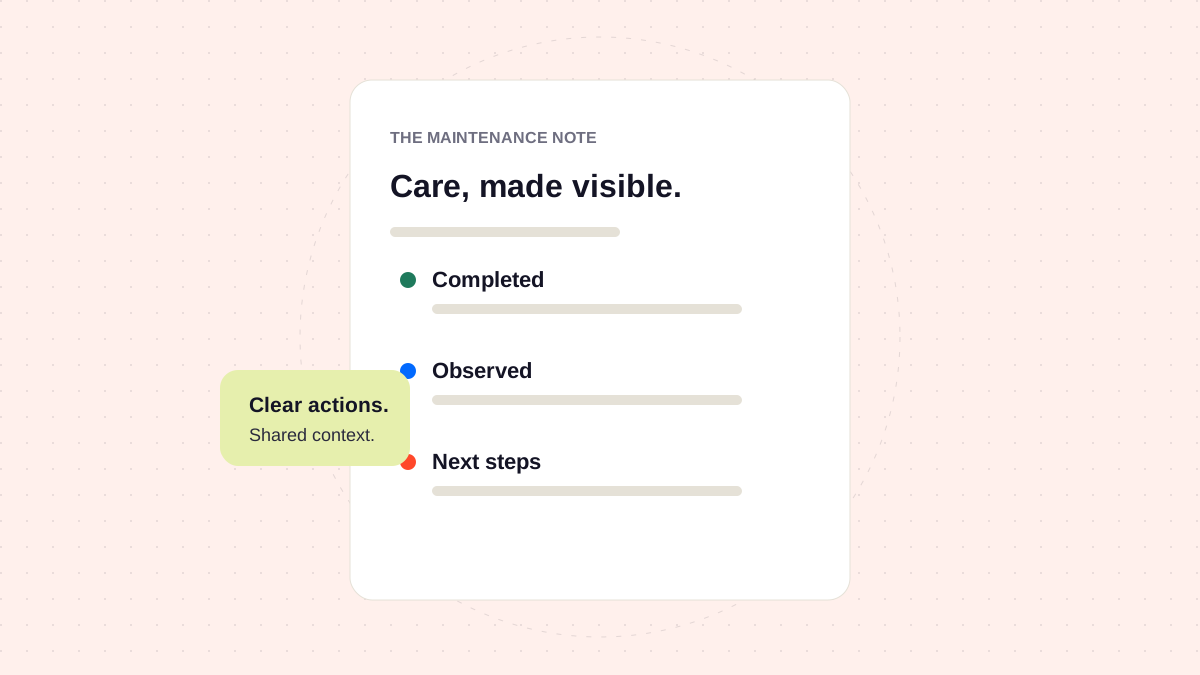
A good handover explains how the website is operated, who owns each responsibility, and which questions remain open. Leave a usable record, not just a folder.

The person receiving a website needs more than a list of accounts. They need enough context to make the next maintenance decision without reconstructing the whole project.
Describe how the website works
Start with its purpose and the visitor journeys that matter most. Then map the practical dependencies: hosting, domain management, CMS or repository, forms, email delivery, and third-party services.
A short explanation of why a dependency exists can save more time than a long export of settings.
Make ownership explicit
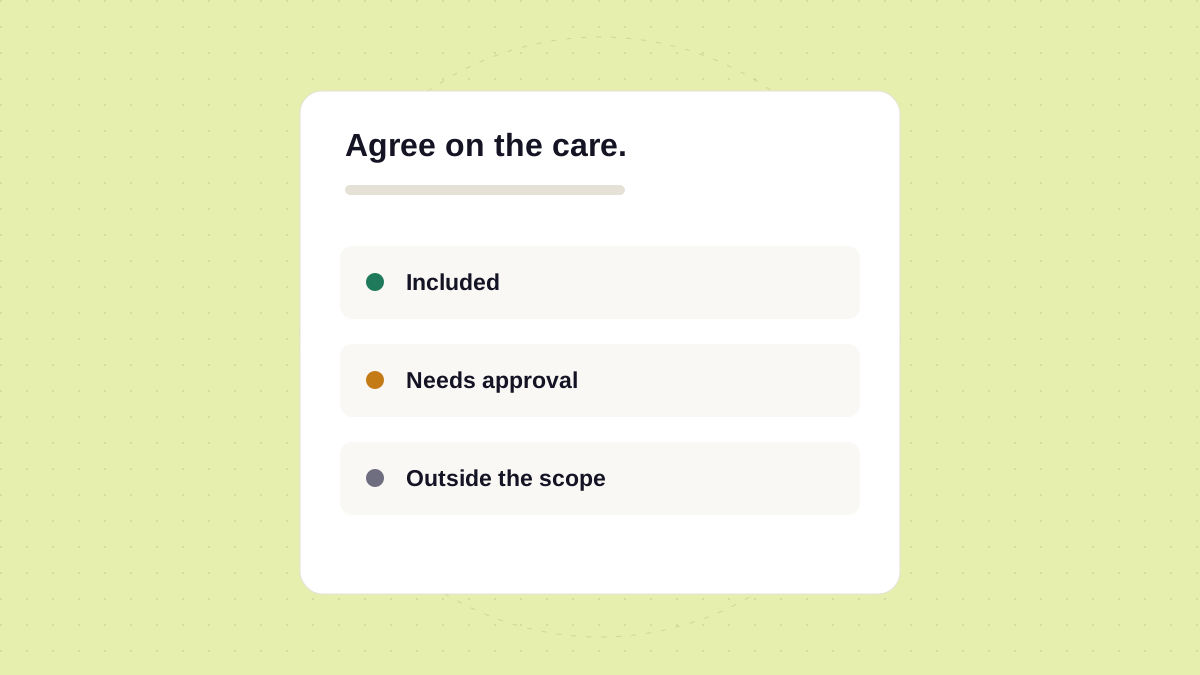
- Identify the person who approves maintenance work.
- Record who controls hosting, domain, and billing accounts.
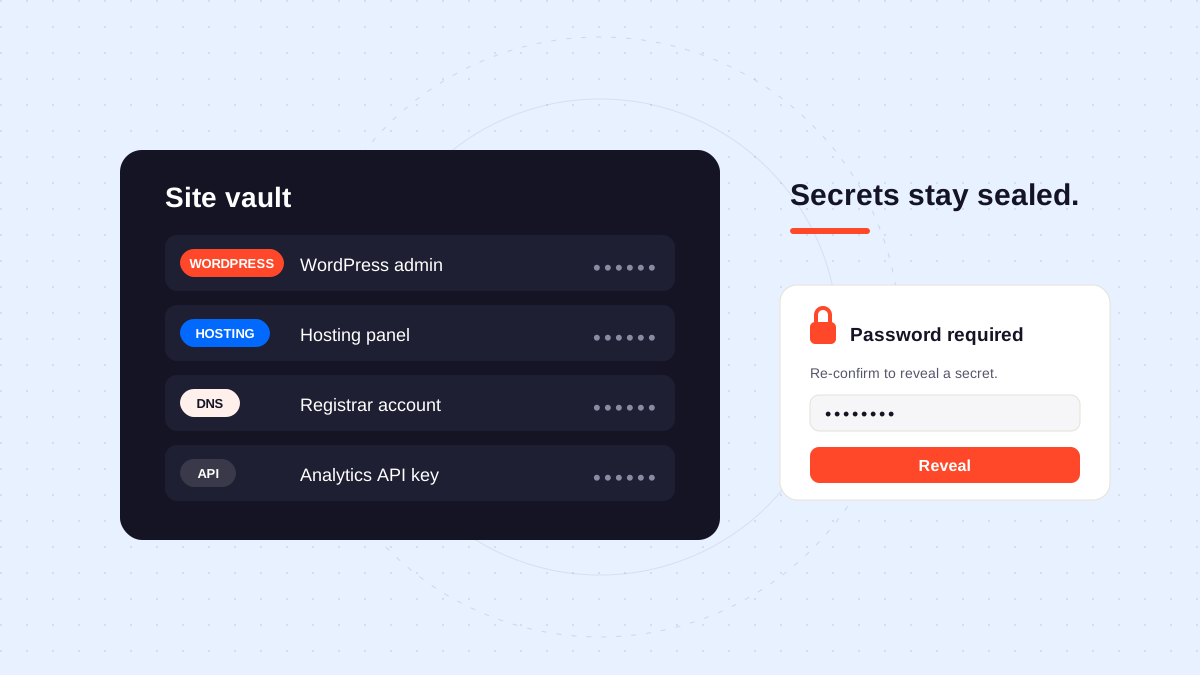
- Share access through the team’s credential process.
- Confirm the receiving team can use the relevant recovery path.
Do not place passwords or recovery codes in the handover document itself.
Leave open questions visible
Separate an accepted limitation from an unresolved issue. If a form has not been tested, say so. If the client has deferred an upgrade, record the decision and the reason available to you.
A useful handover makes uncertainty visible enough that the next team can act on it.
Finish with the next planned check and the person responsible for it. Explore the site profile for the role a shared site record plays in ongoing maintenance.