Static sites need a maintenance plan too
A static website still depends on a working delivery chain. Include its source, build, hosting, integrations, and important visitor journeys in the care plan.
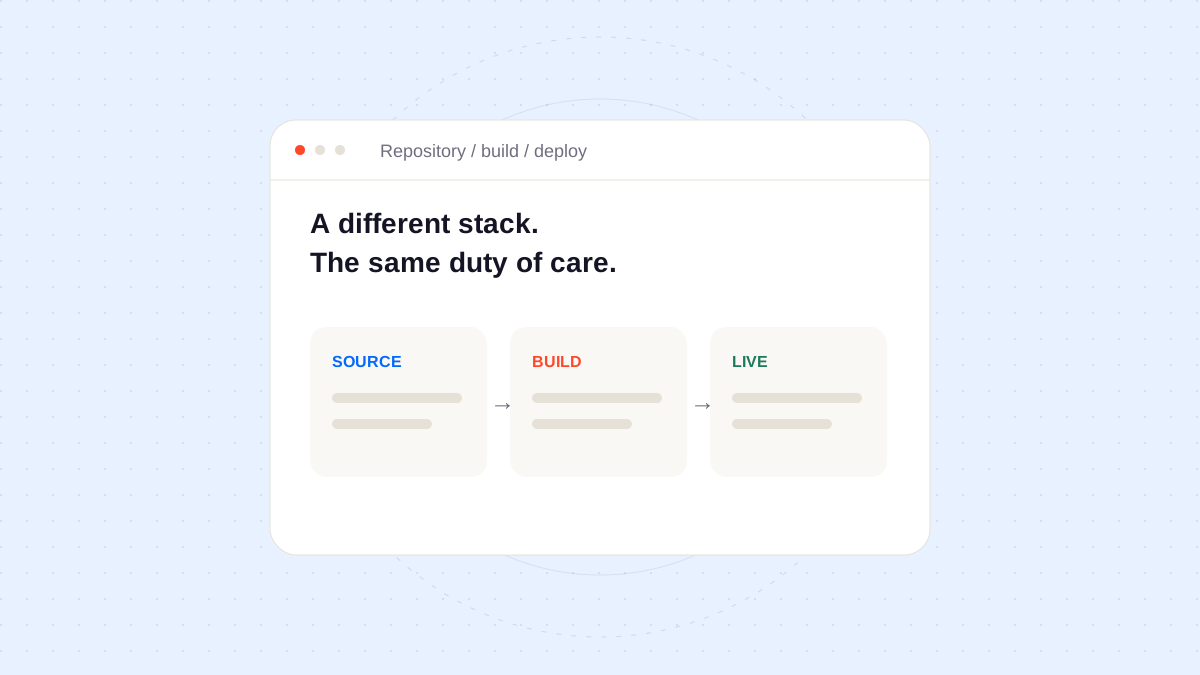
A website without a CMS has fewer moving parts in some areas, but it still has operational dependencies. Someone needs to understand how it is built, deployed, and recovered.
Follow the delivery chain
Document the repository, build process, hosting project, and any environment configuration required for a deployment. Keep secrets in the appropriate secret store rather than in maintenance notes.
| Stage | A useful maintenance question |
|---|---|
| Source | Who can access and review a change? |
| Build | Can the current source still produce the site? |
| Deployment | Which version is live, and how is it restored? |
| Integrations | Do forms and external services behave as expected? |
Test what visitors use
A successful deployment does not prove every integration is working. Check the critical journeys: a contact form, a booking link, a search interface, or a download that matters to the client.
Record the check and its result so the next person can repeat it.
Keep responsibilities consistent
The technology changes between websites; the need for ownership, context, and a recovery path remains. A mixed portfolio benefits from a common maintenance record with enough room for each stack’s differences.
Read about Orbit’s approach to static sites and adapt the maintenance checklist to the site’s delivery chain.