
Equal desk
Static sites belong on the same desk.
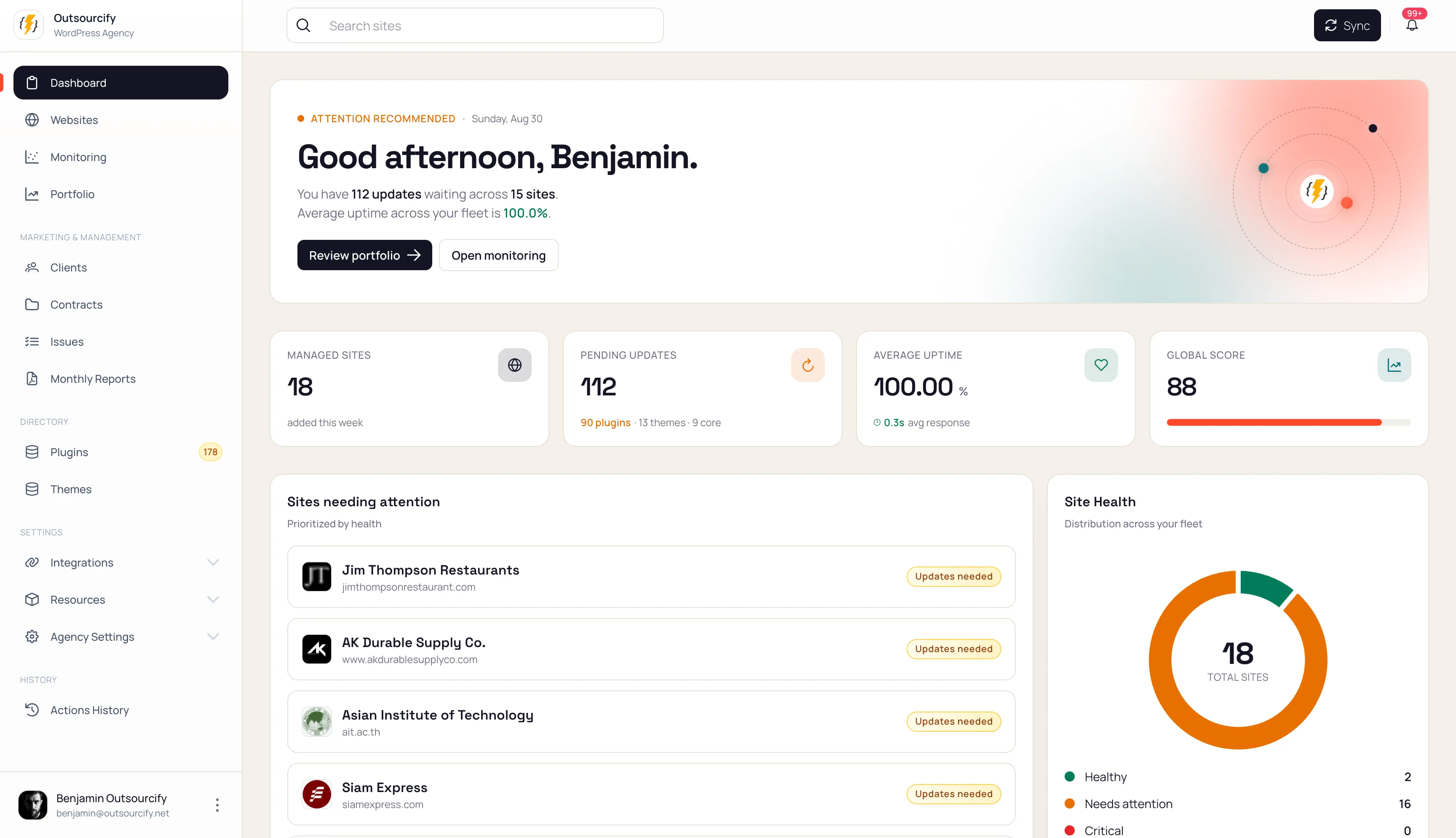
Orbit Webmaster is made for WordPress. It also handles static websites through GitHub sync. Brochure sites, campaign sites, and GitHub-hosted frontends get a client, a contract, uptime, Lighthouse, and a source of truth — without being turned into WordPress.
Why this page exists
WordPress tools ignore everything that is not WordPress. Agencies still ship plenty of it. Those sites fall out of the maintenance practice until something is down or a domain expires.
Orbit keeps them in the fleet.
The plugin equivalent, for sites with no plugins.
| WordPress | Static | |
|---|---|---|
| Connect | Orbit plugin + token | GitHub repository |
| Source of truth | Live snapshot | The repo (and deploy metadata) |
| What you learn | Plugins, themes, PHP, content | Framework, branch, last commit, drift |
| Operations | WP actions, hygiene, staging updates | Sync, deploy awareness, cache purge where the host allows |
| Monitoring, SEO, CRM | Shared | Shared |
| Client portal | Inside wp-admin | Agency reports and requests (no fake admin) |
Link the repository and the production URL. GitHub is how the site stays in sync with the operations desk. Production is what we ping and audit.
What we are not
main, is the URL up, is the retainer in hours, who owns this.What a static site gets on day one
- A row in the same portfolio as the WordPress shops
- Client, tags, site type, hosting notes
- Uptime and performance monitoring
- Lighthouse audits and reports
- Tasks, requests, packages, hours
- A fiche that is lighter and repo-centric: source, last sync, drift, monitoring, SEO
What it does not get
Mixed portfolios are the default
Most agencies we care about are not “WordPress only” or “static only.” They are a WooCommerce store, three Divi vitrines, a Timber custom theme with its own repo, and two campaign sites on GitHub.
Orbit is the desk that can hold all of that without pretending they are the same kind of machine.